A Guide to Proper Gym Footwear


Your feet are your foundation. During a squat, deadlift, or lunging movement, they are the only point of contact with the ground. How your foot interacts with the floor dictates the alignment of your ankles, knees, hips, and lower back.
Here is why your footwear choice matters, and how to match your shoe to your specific foot type and training style.
The Danger of the "Squishy" Running Shoe While Lifting Heavy
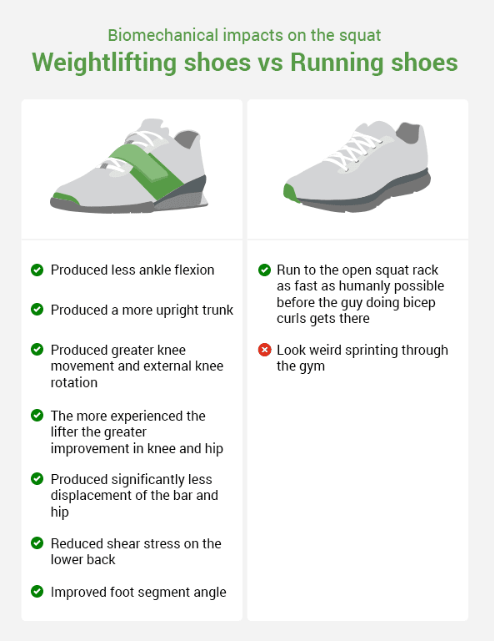
The most common gym mistake is wearing plush, heavily cushioned running shoes to lift weights. Running shoes are engineered for forward kinetic energy and shock absorption, featuring a thick, compressed foam midsole and a noticeable heel-to-toe drop.
While that pillowy cushion is great for pavement, it acts like a mattress under a heavy barbell. When you squat or overhead press in a running shoe, your foot micro-adjusts constantly to find stability. This unstable base bleeds power, reduces force transfer, and forces your joints out of alignment.
Matching the Shoe to Your Foot Type
Just like programming a workout, shoe selection requires an individualized approach. Different foot structures require specific support networks to perform safely and efficiently under load.
1. Flat Feet / Low Arches (Overpronation)
If your arches collapse inward when you stand, your feet naturally seek stability. In the gym, this overpronation can cause your knees to cave inward (valgus collapse) during heavy lower-body movements.
What to look for: You need a cross-trainer with lateral sidewall wrap and a firm, wide midsole that prevents the foot from rolling inward.
Top Examples: Nike Metcon series, Reebok Nano or Born Primitive Savage 1 series. These offer high-density foam midsoles and a wide plastic heel clip that acts as an external stabilizer, giving your foot a rigid anchor point.
2. High Arches (Underpronation / Supination)
High arches are rigid and absorb shock poorly. If you have high arches, your weight rests heavily on the outside edges of your feet, which can limit ankle mobility and deep squat depth.
What to look for: A shoe with targeted arch contours or structured support, or a dedicated lifting shoe with an elevated heel to compensate for tight ankles.
Top Examples: TYR CXT-1 Trainer (which features a patent-pending stability platform) or a dedicated lifter like the Nike Romaleos if your focus is strictly heavy squats and Olympic lifting.
3. Wide Feet & Natural Lifters (The Wide Toe Box)
Standard athletic shoes taper sharply at the toes, squeezing the metatarsal bones together. To create maximal power against the floor, your toes need to splay naturally to grip the ground.
What to look for: "Zero-drop" footwear (meaning the heel and toe sit at the exact same height) featuring an anatomical, wide toe box.
Top Examples: Lems Primal, Vivobarefoot Motus Strength, or Xero Shoes 360. These allow your foot to act like a natural tripod—big toe, pinky toe, and heel all rooted firmly to the floor for ultimate kinetic feedback.
The Golden Rule for Lift Day Footwear: If you can compress the sole of your shoe easily with your thumb, leave it in the locker room on leg day. Trade the squish for a firm, flat base, and watch your stability and lifting numbers immediately improve.
- Coach Ellie
Interested in learning more?
OR
Join a FREE Strength and Conditioning Class (stick around for a chat after!)


Comments